

Why are you getting traffic but not enough sales on your ecommerce store?
Why do visitors browse your products, add items to the cart, and still leave without completing the purchase? These are common questions many store owners face when their website is not converting visitors into customers.
In most cases, the issue is not your product but how your website is designed and optimized. If the user experience is confusing or slow, people will leave before taking action. With the right strategy and well planned ecommerce web design services, you can improve user experience, build trust, and turn your visitors into paying customers.
Why Ecommerce Stores Fail
Many ecommerce stores struggle not because the products are bad, but because of small mistakes that affect the overall experience. Store owners often focus on adding more products or running ads, but ignore how users interact with the website, which leads to poor results.
When your website is difficult to navigate, slow to load, or lacks clear information, users quickly lose interest. They do not spend time figuring things out and instead move to competitors who offer a smoother and more reliable shopping experience.
- Poor website structure and confusing navigation
- Slow loading speed that drives users away
- Lack of trust signals like reviews and secure checkout
- Weak product descriptions and low quality images
- Complicated checkout process leading to cart abandonment
Understanding these common problems helps you identify what is going wrong in your store. Once you fix these issues, you create a better experience for users, which leads to higher trust, more engagement, and improved sales.
10 Common Ecommerce Mistakes to Avoid
Many store owners repeat the same mistakes without realizing their impact. Identifying and fixing them can improve your website performance and sales.
Below are the most common ecommerce mistakes that you should avoid.
1. Poor Website Design
Many ecommerce websites fail because their design is cluttered, confusing, or poorly structured. When a user lands on your website, they expect to quickly understand where to go and how to find products. If the layout is messy, menus are unclear, or too many elements are competing for attention, users feel overwhelmed and leave without exploring further.
A good website design is not just about looks, it is about clarity and ease of use. Your homepage, category pages, and product pages should guide users step by step. Important elements like search bar, categories, filters, and call to action buttons should be easy to find. When users can navigate smoothly and find products without effort, they are more likely to stay longer and make a purchase.
How to Improve Website Design
- Keep your layout clean and organized
- Use clear navigation menus and categories
- Highlight important elements like offers and buttons
- Avoid too many colors, fonts, or distractions
- Make sure your design is consistent across all pages
A clean and simple design improves user experience and builds trust. When your website is easy to use and visually clear, visitors stay longer, explore more products, and are more likely to convert into customers.
2. Slow Website Speed
Many ecommerce websites lose customers because pages take too long to load. When a user clicks on your site, they expect it to open quickly. If it takes even a few extra seconds, users get frustrated and leave without exploring your products.
Website speed directly affects user experience and trust. A slow site not only drives visitors away but also reduces your chances of ranking well on search engines like Google. Faster websites feel more reliable, keep users engaged, and increase the chances of completing a purchase.
How to Improve Website Speed
- Compress and optimize images
- Use fast and reliable hosting
- Reduce unnecessary plugins or scripts
- Enable caching for quicker loading
- Optimize code and remove unused elements
Faster websites perform better and create a smooth experience for users. When your site loads quickly, visitors stay longer, trust your brand more, and are more likely to convert into customers.
3. No Mobile Optimization
Many ecommerce stores lose a large portion of their potential customers because their website is not optimized for mobile devices. Today, most users browse and shop using their phones, and they expect a smooth and easy experience. If your website looks broken, loads slowly, or is difficult to navigate on mobile, users will leave immediately.
Mobile optimization is not just about fitting content on a smaller screen. It involves creating a responsive design, ensuring buttons are easy to tap, text is readable, and navigation is simple. Search engines like Google also prioritize mobile friendly websites, which means poor mobile experience can affect both traffic and conversions.
How to Improve Mobile Optimization
- Use responsive design that adapts to all screen sizes
- Keep buttons large and easy to tap
- Ensure text is readable without zooming
- Simplify navigation for smaller screens
- Optimize images and speed for mobile devices
A mobile friendly design ensures a smooth and consistent experience across all devices. When users can easily browse and shop on mobile, they stay longer, engage more, and are more likely to complete their purchase.
4. Weak Product Pages
Many ecommerce stores struggle with conversions because their product pages do not provide enough information. When users land on a product page, they expect clear details, high quality images, and answers to their questions. If the page feels incomplete or unclear, users lose confidence and hesitate to buy.
A strong product page should help users understand the value of the product and make a quick decision. It should include detailed descriptions, multiple images, pricing, features, and important information like size, material, or usage. When everything is clear and easy to understand, users feel more confident about making a purchase.
How to Improve Product Pages
- Use high quality images from multiple angles
- Write clear and detailed product descriptions
- Highlight key features and benefits
- Add pricing, availability, and specifications
- Include customer reviews and ratings
Strong product pages build trust and reduce hesitation. When users get complete and clear information, they feel confident in their decision, which increases conversions and boosts sales.
5. Complicated Checkout
Many ecommerce stores lose potential sales at the final stage because the checkout process is too long or confusing. When users are ready to buy, they expect a quick and smooth checkout. If they are asked to fill too many details or go through multiple steps, they may abandon the purchase.
A complicated checkout creates frustration and reduces trust. Users prefer a simple process where they can complete their purchase in just a few steps. The easier and faster the checkout experience, the higher the chances of conversion.
How to Improve Checkout Process
- Reduce the number of steps in checkout
- Allow guest checkout without mandatory sign up
- Ask only for essential information
- Provide multiple payment options
- Show clear progress indicators
A simple and smooth checkout process improves user experience and reduces cart abandonment.
6. Ignoring SEO
Many ecommerce stores struggle to get consistent traffic because they ignore SEO. Without proper optimization, your website may not appear in search results, which means potential customers cannot find your products even if they are actively searching for them.
SEO helps your website rank higher on search engines like Google and brings organic traffic to your store. If you are new, it is helpful to first understand what is seo and how it works to see its importance in ecommerce. A well optimized website increases visibility, attracts the right audience, and improves your chances of making sales.
How to Improve Ecommerce SEO
- Use relevant keywords in product titles and descriptions
- Optimize meta titles and descriptions
- Create clear and user friendly URLs
- Improve website speed and mobile experience
- Build quality backlinks to increase authority
SEO improves your website visibility and helps attract consistent organic traffic.
7. No Trust Signals
Many ecommerce websites lose potential customers because they do not build trust at the right moment. When users visit your store for the first time, they look for signs that your business is genuine and safe. If your website does not show reviews, ratings, or security indicators, users may hesitate and leave without making a purchase.
Trust signals help reduce doubt and make users feel confident about buying from you. Elements like customer reviews, testimonials, secure payment badges, return policies, and contact details show that your business is reliable. When users feel safe and informed, they are more likely to complete their purchase.
How to Add Trust Signals
- Display customer reviews and ratings on product pages
- Show secure payment and SSL badges
- Add clear return and refund policies
- Include contact details and business information
- Use testimonials and real customer feedback
Trust signals build confidence and remove hesitation. When users feel secure and trust your website, they are more likely to complete transactions, which improves conversions and overall sales.
8. Poor Marketing Strategy
Many ecommerce businesses spend money on ads and promotions but still struggle to get results. The main issue is not the effort, but the lack of proper targeting and planning. When your marketing does not reach the right audience, it brings traffic that does not convert into customers.
A strong marketing strategy focuses on understanding your audience, choosing the right platforms, and delivering the right message. When your campaigns are aligned with user intent, you attract people who are more likely to be interested in your products and ready to make a purchase.
How to Improve Marketing Strategy
- Identify and understand your target audience
- Use the right platforms like social media and search
- Create clear and relevant messaging
- Run targeted campaigns instead of broad promotions
- Track performance and optimize regularly
A focused marketing strategy helps you reach the right audience and improve conversions. When your efforts are targeted and well planned, you get better results and higher returns on your investment.
9. No Clear Call to Action
Many ecommerce websites lose potential customers because they do not clearly guide users on what to do next. When a visitor lands on your page and finds a product but does not see a clear next step, they may leave without taking any action.
How to Improve Call to Action
- Use clear and action oriented text like “Buy Now” or “Add to Cart”
- Make buttons visible with proper size and color
- Place CTAs at the right positions on pages
- Avoid too many competing buttons
- Create urgency with limited offers or discounts
Clear calls to action guide users and remove confusion. When users know exactly what step to take next, it increases engagement and improves your chances of converting visitors into customers.
10. Not Analyzing Data
Many ecommerce businesses focus on traffic and sales but ignore what is happening behind the scenes. Without tracking user behavior, it becomes difficult to understand why visitors are not converting or where they are dropping off.
Data helps you see how users interact with your website, which pages perform well, and where improvements are needed. Tools like Google Analytics allow you to track important metrics such as traffic sources, bounce rate, and conversion rates. When you understand this data, you can make smarter decisions and improve your website performance step by step.
How to Analyze and Use Data
- Track user behavior and page performance
- Identify pages with high bounce rates
- Monitor conversion rates and user flow
- Test different layouts and content
- Use insights to improve design and strategy
Tracking and analyzing data helps you understand what is working and what is not. When you use data to guide your decisions, you can continuously improve your website and achieve better results over time.
How to Fix These Ecommerce Mistakes
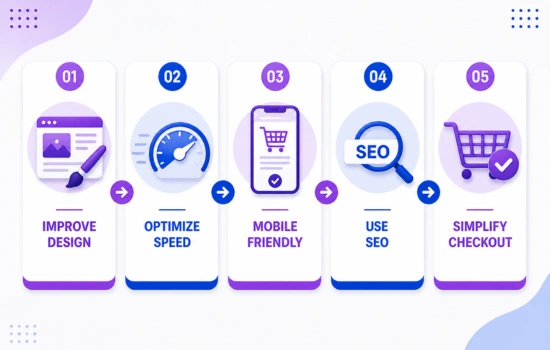
Many ecommerce problems come from small gaps in user experience and optimization. The good part is you do not need complex changes to fix them, simple improvements can create a big impact.
The focus should be on making your website easy to use, fast, and clear for users. When your store works smoothly, visitors are more likely to stay and complete their purchase.
- Improve Design: Keep your website layout clean, simple, and easy to navigate so users can find products without confusion.
- Optimize Speed: Reduce loading time by optimizing images, using good hosting, and removing unnecessary elements.
- Mobile Friendly: Ensure your website works properly on all devices, especially smartphones, for a smooth browsing experience.
- Use SEO: Optimize your website content and structure so it can rank better on search engines like Google and attract organic traffic.
- Simplify Checkout: Reduce steps in the checkout process and make it quick and easy for users to complete their purchase.
Consistent improvements help your website perform better over time. When you focus on user experience and optimization, it leads to higher engagement, better conversions, and long term growth.t users effectively.
Conclusion
If your ecommerce store is not generating enough sales, the problem is often hidden in small mistakes that affect user experience and trust. Ignoring these issues can limit your growth and reduce your chances of success.
By fixing these common ecommerce mistakes, you can create a better shopping experience, improve conversions, and build a strong online presence. If you want faster results and a professional approach, it is always a smart choice to work with experts who understand ecommerce strategy and design.
If you are ready to improve your store performance, contact us for expert ecommerce web design services and start growing your online business today.