
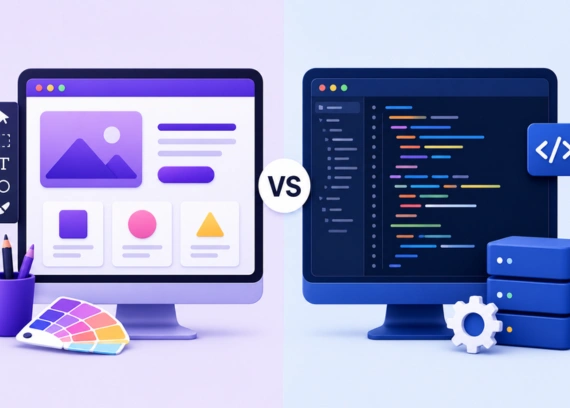
Are you confused about why your website is not performing as expected even after investing time and money?
Do you often hear terms like web design and web development but feel unsure about what they actually mean or which one your business truly needs? This confusion is common, and it often leads to decisions that do not deliver the results you were hoping for.
In reality, design and development play very different but equally important roles in building a successful website. One focuses on how your website looks and feels, while the other ensures it works smoothly. When both are done correctly, your website becomes a powerful tool for attracting visitors and converting them into customers. With the right strategy and professional web design services, you can create a website that not only looks appealing but also performs effectively and drives real business growth.
What Is Web Design?
Many people believe web design is only about making a website look attractive, but it involves much more than just visuals. A good design focuses on how users interact with your website, how easily they can navigate, and how clearly they can understand your content. If a website looks good but is difficult to use, visitors will leave quickly without taking any action.
Web design includes elements like layout, structure, colors, typography, and overall user experience. It ensures that every section of the website is organized in a way that guides users smoothly from one step to another. A well designed website not only grabs attention but also builds trust and makes it easier for visitors to explore, engage, and take action.
What Is Web Development?
While design focuses on how a website looks, web development focuses on how it works behind the scenes. Many businesses overlook this part, but it plays a critical role in performance and reliability. If your website has slow loading pages, broken features, or technical errors, users will leave quickly no matter how good the design looks.
Web development is the process of building and maintaining the functionality of a website using coding and technical tools. It includes frontend development, which handles what users see and interact with, and backend development, which manages servers, databases, and overall performance. Strong development ensures your website is fast, secure, and works smoothly across different devices.er experience, and increases the chances of converting visitors into customers.Select 73 more words to run Humanizer.
Web Design vs Web Development: Key Differences
Many people use these terms interchangeably, but they serve different purposes. Understanding the difference helps you make better decisions when building or improving your website.
Both web design and web development play important roles in creating a successful website. One focuses on how the site looks and feels, while the other ensures it works smoothly and efficiently.
| Aspect | Web Design | Web Development |
| Main Focus | Visual appearance and layout of the website | Functionality and technical structure of the website |
| Goal | Create an attractive and user friendly experience | Ensure the website works smoothly and efficiently |
| Approach | Creative and design oriented | Technical and coding oriented |
| Key Elements | Colors, typography, layout, images, user experience | Coding, database, server, website logic |
| Tools Used | Design tools like Figma, Adobe XD, Photoshop | Programming languages like HTML, CSS, JavaScript, PHP |
| User Interaction | Focuses on how users feel and navigate the website | Focuses on how the website responds to user actions |
| Performance Role | Improves usability and engagement | Ensures speed, security, and performance |
| Mobile Optimization | Designs responsive layouts for different devices | Implements responsive functionality across devices |
| Output | Website design layout or prototype | Fully functional and working website |
| Skill Type | Creative and visual skills | Technical and problem solving skills |
Web design and web development are different but work together to create a complete website. Design makes your website attractive and easy to use, while development ensures it performs properly. A successful website always needs both to work together effectively.
How Design and Development Work Together
Many websites fail because they focus only on appearance or only on functionality. When one side is strong and the other is weak, users do not get a smooth and satisfying experience, which affects engagement and results.
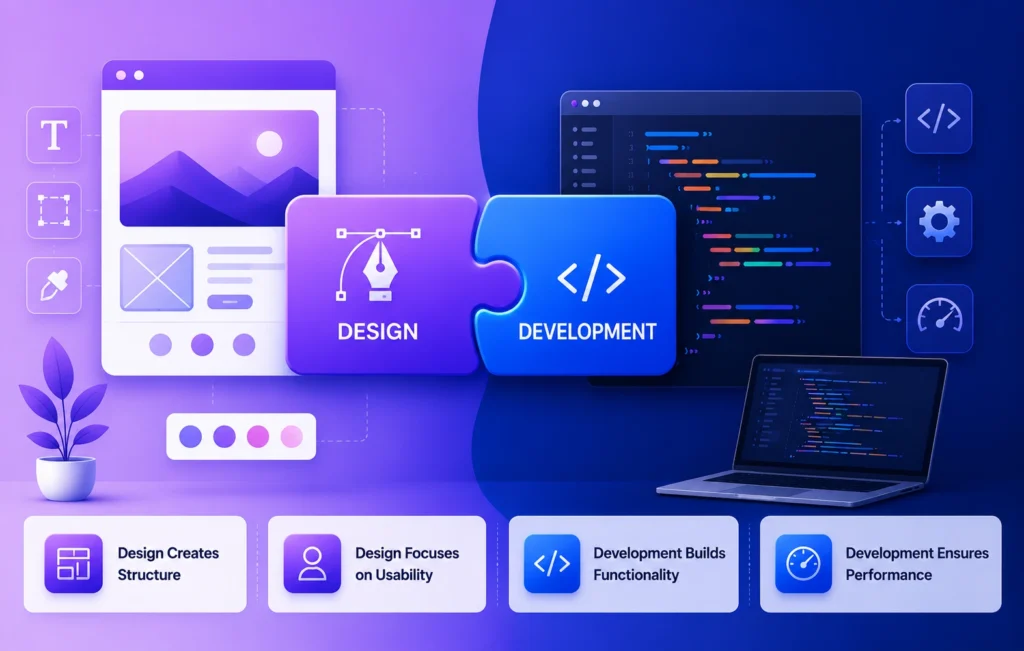
To build a successful website, both design and development must work together. Design plans how the website should look and feel, while development ensures everything works properly behind the scenes.
Understanding Their Connection
Design and development are part of the same process, not separate tasks. Designers first create the layout, structure, and user journey based on how users will interact with the website.
Once the design is ready, developers turn it into a fully functional website using code. They make sure every element works correctly, loads quickly, and performs well on different devices.
How They Combine
- Design Creates Structure: Designers plan the layout, navigation, and user flow to make the website easy to understand and use.
- Development Builds Functionality: Developers convert the design into a working website by adding features, interactions, and backend systems.
- Design Focuses on Usability: Design ensures users can navigate easily and complete actions without confusion.
- Development Ensures Performance
Development makes sure the website is fast, secure, and works smoothly across all devices.
When design and development work together, they create a complete and effective website experience. This combination helps your website attract users, keep them engaged, and turn them into customers.res and simple management. It is a great option for businesses that want a balance between functionality and ease of use.
Why Both Are Important for Your Website
Many businesses do not get the expected results from their website because they focus on only one aspect. Either the website looks attractive but does not function properly, or it works well but fails to engage users visually.
Better User Experience
A good design makes your website easy to understand, while development ensures everything works without errors. Together, they create a smooth and frustration free experience for users. When users can navigate easily and interact without issues, they stay longer and are more likely to take action.
Improved Website Performance
Development focuses on speed, security, and functionality, while design ensures content is structured clearly for users. Both are required for a well performing website. A fast and well structured website improves user satisfaction and overall performance.
Increased Engagement
An attractive design grabs attention, and smooth functionality keeps users engaged. If either one is missing, users may lose interest quickly. When both design and development are strong, users spend more time exploring your website.
Higher Conversion Rates
Design guides users toward important actions, while development ensures those actions work properly without any issues. A balanced website increases trust and improves the chances of converting visitors into customers.
Design and development are equally important for website success. When both work together, your website becomes more effective in attracting, engaging, and converting users.Select 76 more words to run Humanizer.
Skills Required for Each
Many people think building a website is a single task, but it actually involves different skill sets. Understanding what skills are required in design and development helps you choose the right approach and the right professionals.
Skills Needed for Web Design
Web design is all about creating a visually appealing and user friendly experience. It requires a mix of creativity and understanding of how users interact with a website.
- Creative Thinking: Ability to design layouts, choose colors, and create a visually attractive interface.
- User Behavior Understanding: Knowing how users think and interact helps in designing a smooth and intuitive experience.
- Design Tools Knowledge: Familiarity with tools like Figma, Adobe XD, or Photoshop to create layouts and prototypes.
- Basic UX Principles: Understanding usability, navigation, and structure to improve user experience.
Web design requires a balance of creativity and user understanding. A good designer focuses on both looks and usability.
Skills Needed for Web Development
Web development focuses on making the website functional and technically strong. It requires logical thinking and problem solving abilities.
- Coding Knowledge: Understanding languages like HTML, CSS, JavaScript, and backend technologies.
- Problem Solving Ability: Ability to fix errors, debug issues, and ensure smooth functionality.
- Technical Understanding: Knowledge of how servers, databases, and systems work together.
- Frameworks and Tools: Experience with tools and frameworks that help build and manage websites efficiently.
Web development requires strong technical skills and logical thinking. A skilled developer ensures your website runs smoothly and securely.
Which One Do You Need?
The right choice depends on your current situation. Some websites need visual improvement, while others need technical fixes. In most cases, a combination of both gives the best results.
When Your Website Needs Better Design
If your website does not attract or engage users, the issue is often related to design. A poor layout or confusing structure can make visitors leave quickly.
- Your website looks outdated or unprofessional
- Users struggle to navigate or find information
- Engagement is low and visitors do not stay long
Improving design helps create a better first impression and makes your website easier to use, which increases user engagement.
When Your Website Needs Better Development
Sometimes the problem is not how your website looks, but how it works. Technical issues can affect performance and user experience.
- Your website is slow or takes time to load
- Features like forms or buttons are not working properly
- There are technical errors or security issues
Improving development ensures your website runs smoothly, loads faster, and provides a reliable experience for users.
Common Mistakes to Avoid
Many businesses struggle with their website performance not because of lack of effort, but because of avoidable mistakes in design and development. These mistakes may seem small, but they can create a poor user experience and reduce your chances of getting leads or sales.
- Focusing Only on Design: Many businesses invest only in visuals and ignore functionality. A good looking website that does not work properly will frustrate users.
- Ignoring User Experience: If your website is difficult to navigate or confusing, users will leave without exploring further.
- Slow Website Speed: A slow loading website increases bounce rate and reduces engagement.
- Not Mobile Friendly: Ignoring mobile users can result in losing a large portion of your audience.
- Poor Navigation Structure: Complicated menus and unclear structure make it hard for users to find information.
- Lack of Clear Call to Action: If users are not guided on what to do next, they may leave without taking action.
- Ignoring SEO Basics: Without proper SEO, your website may not appear in search results on platforms like Google.
- Weak Content Structure: Poorly organized content makes it difficult for users to read and understand your message.
- Not Testing the Website: Many websites go live without proper testing, leading to broken links or non working features.
- Ignoring Security: Lack of security measures can affect user trust and put your website at risk.
- Using Too Many Elements: Overloading your website with animations, colors, or features can make it look cluttered.
- Not Updating Regularly: Outdated content and design can make your website look inactive and unreliable.
Avoiding these common mistakes is essential for building a successful website. When your website is clean, fast, secure, and user friendly, it performs better and helps you achieve your business goals.
Conclusion
If your website is not delivering results, the problem is often a lack of balance between design and development. A visually attractive website without proper functionality can frustrate users, while a technically strong website without good design can fail to engage visitors.
By understanding the difference between web design and web development, you can make better decisions and create a website that performs well. If you want a professional approach and better results, it is always a smart choice to work with experts who understand both aspects. If you are ready to improve your website and grow your business, schedule appointment today and contact us for expert web design services.