
Are you getting traffic on your ecommerce website but still not seeing enough sales?
Do visitors browse your products, add items to their cart, and then leave without completing the purchase?
This situation can feel frustrating and confusing, especially when you have invested time, effort, and money into building your online store but are not getting the results you expected.In many cases, the problem is not your product but how your website is designed and experienced by users. If your site is slow, confusing, or difficult to navigate, people will leave quickly. With the right strategy and well planned ecommerce web design services, you can create a smooth and engaging experience that builds trust, keeps users interested, and turns visitors into paying customers
What Is Ecommerce Website Design?
Many people assume ecommerce website design is only about making a site look attractive, but that is only one part of the process. This misunderstanding often leads to websites that appear visually appealing but fail to guide users properly or generate sales. A successful ecommerce design focuses on how users move through your website, how easily they can find products, and how smoothly they can complete a purchase without confusion.
Ecommerce website design is the process of creating an online store that balances usability, visual appeal, and functionality. It includes structuring pages, organizing products, improving navigation, and optimizing every step of the user journey from landing on the homepage to checkout. A well designed ecommerce website makes it easy for users to browse, builds trust through a clean interface, and encourages them to take action, ultimately improving conversions and business growth.
Why Ecommerce Website Design Is Important
Many ecommerce businesses struggle to get consistent sales because they underestimate the role of design. They focus on products and pricing but ignore how users experience the website, which directly affects engagement and conversions.
Your website is the first impression of your business. When users visit your store, they quickly decide whether to stay or leave based on how easy it is to use and how trustworthy it feels.
- Strong First Impression: A clean and professional design creates a positive first impression. It makes users feel confident about your brand from the moment they land on your website.
- Builds Trust: A well designed website with clear information, proper layout, and secure elements helps users trust your business and feel safe while making a purchase.
- Better User Experience: Good design ensures users can easily navigate, find products, and complete actions without confusion or frustration.
- Increases Sales: When your website is easy to use and visually appealing, users are more likely to stay longer and complete their purchase.
A good ecommerce website design plays a key role in business growth. It builds trust, improves user experience, and increases the chances of converting visitors into customers.Select 73 more words to run Humanizer.
Key Elements of Ecommerce Website Design
A successful ecommerce website is not built on one factor alone. It is a combination of multiple elements that work together to create a smooth and effective shopping experience.
When these elements are properly implemented, they help users navigate easily, build trust, and increase the chances of converting visitors into customers.
User Friendly Navigation
Many users leave a website simply because they cannot find what they are looking for. If your navigation is confusing or cluttered, it creates frustration and increases bounce rate.
Your website should have clear menus, well organized categories, and a visible search option. Filters and sorting features should also be easy to use so users can quickly find products that match their needs.
Mobile Responsive Design
A large number of users browse and shop using their mobile devices. If your website does not work properly on smaller screens, you risk losing a major portion of your audience.
Mobile responsive design ensures your website adapts to different screen sizes. Text should be readable, buttons should be easy to tap, and navigation should remain simple even on mobile devices.
Fast Loading Speed
Users expect websites to load quickly. If your website takes too long to open, they are likely to leave before even seeing your products.
Website speed also affects your ranking on search engines like Google. A faster website improves user experience and keeps visitors engaged.
Attractive UI Design
The visual appearance of your website plays a big role in creating a first impression. A poorly designed website can make your business look unprofessional and untrustworthy.
Using the right colors, fonts, spacing, and layout creates a clean and modern look. A well designed interface guides users visually and makes the browsing experience more enjoyable.
Clear Call to Action
Users should always know what step to take next. Without proper guidance, they may leave your website without taking any action.
Buttons like “Add to Cart,” “Buy Now,” or “Checkout” should be clearly visible and placed at the right positions. These elements guide users toward completing their purchase.
Trust Signals
Before making a purchase, users need to feel confident about your website. Lack of trust can stop them from completing the transaction.
Trust signals such as customer reviews, ratings, secure payment badges, return policies, and contact details help build credibility. These elements reassure users that your business is reliable.
Trust signals increase confidence and reduce hesitation. When users trust your website, they are more likely to complete their purchase and return in the future. and optimization, it leads to higher engagement, better conversions, and long term growth.t users effectively.
Types of Ecommerce Website Design
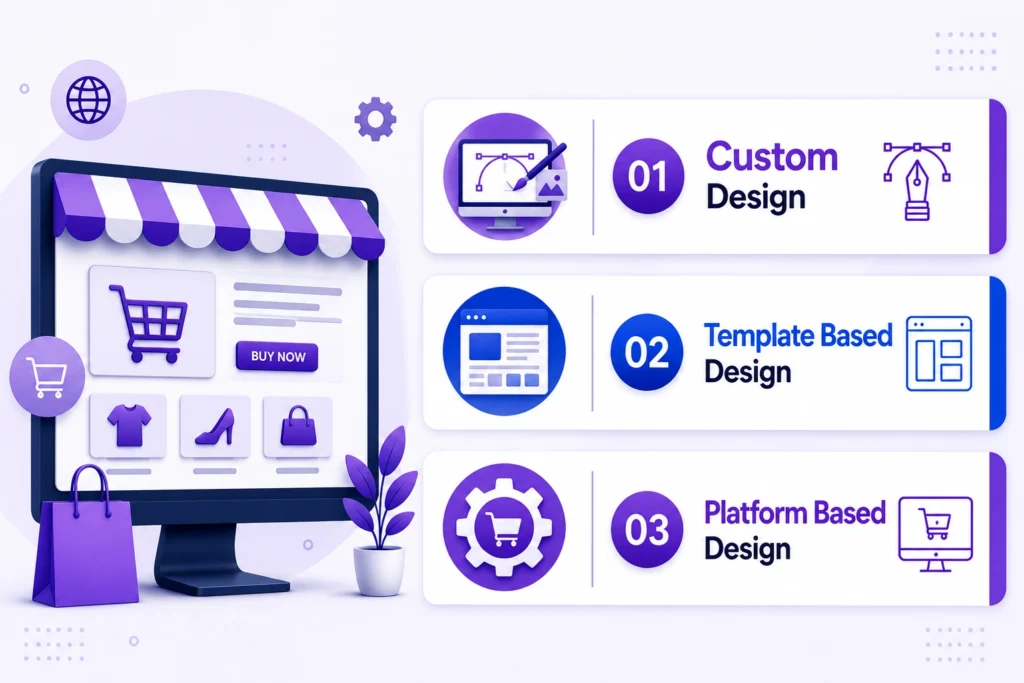
Not every ecommerce business needs the same type of website design. The right choice depends on your budget, business goals, and how much control you want over features and customization.
Understanding these different types helps you choose a solution that fits your needs and supports your long term growth.
Custom Design
Custom ecommerce design is built from scratch based on your brand, business model, and specific requirements. It gives you complete control over how your website looks and functions.
This type of design is ideal for businesses that want a unique identity and advanced features tailored to their customers.
Key Features of Custom Design:
- Fully personalized design based on your brand
- Unique layout and user experience
- Advanced features and functionality
- Scalable for future growth
When to Choose Custom Design:
- You want a strong brand identity
- You need custom features or integrations
- You are planning long term business growth
Custom design offers flexibility and uniqueness. It helps you stand out from competitors and create a strong, professional online presence.
Template Based Design
Template based design uses pre designed layouts that can be customized with your content, colors, and branding. It is a faster and more affordable option compared to custom design.
This type of design is suitable for businesses that want to launch quickly without investing heavily in development.
Key Features of Template Design:
- Ready to use layouts
- Quick setup and launch
- Lower development cost
- Easy customization options
When to Choose Template Design:
- You have a limited budget
- You want to launch your store quickly
- You do not need complex features
Template based design is a practical option for beginners and small businesses. It allows you to start quickly while maintaining a decent level of design quality.
Platform Based Design
Platform based design involves building your ecommerce website using tools like Shopify or WooCommerce. These platforms provide built in features that make it easier to manage products, payments, and orders.
It is one of the most popular options because it combines ease of use with flexibility.
Key Features of Platform Based Design:
- Built in ecommerce functionalities
- Easy product and order management
- Integration with payment gateways
- Access to themes and plugins
When to Choose Platform Based Design:
- You want an easy to manage system
- You need essential ecommerce features without custom development
- You prefer scalability with moderate flexibility
Platform based design provides ready to use features and simple management. It is a great option for businesses that want a balance between functionality and ease of use.
Common Ecommerce Design Mistakes
Many ecommerce websites struggle to convert visitors into customers because of small but critical design mistakes. These issues often go unnoticed, yet they directly impact how users interact with your website and whether they complete a purchase.
If you want to understand these problems more deeply, you can explore common ecommerce mistakes and see how they affect your store performance in real scenarios.
Poor Navigation
- Issue: When users cannot easily find products, categories, or important pages, they feel confused and frustrated. Complex menus or unclear structure make browsing difficult.
- Fix: Use clear categories, simple menus, and add search and filter options so users can quickly find what they need.
Slow Website Speed
- Issue: A slow loading website causes users to leave before the page even opens. Speed directly affects both user experience and performance.
- Fix: Optimize images, reduce heavy elements, and use reliable hosting to improve loading time.
Cluttered Design
- Issue: Too many colors, banners, popups, or elements can overwhelm users. A messy layout distracts users and makes it hard to focus on products.
- Fix: Keep your design clean and minimal. Use proper spacing, limited colors, and focus on important elements.
Weak Product Pages
- Issue: Product pages with poor images or incomplete descriptions reduce trust. Users need full details before making a purchase decision.
- Fix: Add high quality images, clear descriptions, pricing, and customer reviews to build confidence.
Complicated Checkout
- Issue: A long or confusing checkout process leads to cart abandonment. Users prefer a quick and simple way to complete their purchase.
- Fix: Reduce steps, allow guest checkout, and provide easy payment options.
Avoiding these common design mistakes can significantly improve your website performance. A simple, fast, and user friendly design helps users stay longer, builds trust, and increases your chances of converting visitors into customers.
How Good Design Improves Sales
Many ecommerce stores focus only on traffic and marketing, but overlook how design affects results. Even if users visit your website, poor design can stop them from exploring or making a purchase.
A well designed website improves how users interact with your store. It makes browsing simple, builds confidence, and guides users toward completing actions, which directly increases sales.
- Improves User Experience: Good design makes your website easy to navigate and understand. Users can quickly find products, read information, and move through the site without confusion.
Impact: When users have a smooth experience, they stay longer and are more likely to take action.
- Increases Trust: A clean and professional design makes your business look reliable. Users trust websites that look secure, organized, and well maintained.
Impact: Higher trust increases the chances of users completing purchases. - Reduces Bounce Rate: If your website loads fast and looks clear, users are less likely to leave immediately. A good first impression keeps them engaged.
Impact: Lower bounce rate means more users exploring your products and services. - Boosts Conversions: A well structured design with clear calls to action guides users toward buying decisions. It removes confusion and simplifies the process.
Impact: More visitors turn into customers, improving overall sales.
Why Design Matters for Growth
Design is not just about appearance, it is a key factor in business performance. A website that is easy to use and visually appealing creates a positive experience, which encourages users to return and recommend your store.
When all elements like navigation, speed, layout, and trust signals work together, your website becomes more effective in converting visitors.
Good design turns visitors into customers by creating a smooth and engaging experience. When users feel comfortable and confident on your website, they are more likely to take action, leading to better conversions and long term business growth.
Tips for Better Ecommerce Website Design
Many ecommerce websites do not perform well because they try to do too much at once. In reality, small and focused improvements can create a noticeable difference in how users interact with your store.
By following the right practices, you can build a strong foundation that improves user experience, builds trust, and increases your chances of conversions over time.
- Keep Design Simple: A clean and simple layout helps users focus on your products without distractions. Avoid too many colors, popups, or unnecessary elements that can confuse visitors.
- Focus on User Experience: Always design your website from the user’s point of view. Make sure it is easy to navigate, quick to load, and simple to use.
- Optimize Website Speed: Speed plays a major role in keeping users engaged. A slow website can drive visitors away before they even explore your products.
- Use Clear Navigation: Users should be able to find what they need without effort. Clear menus, categories, and filters make browsing easy.
- Add Strong Calls to Action: Guide users on what to do next with clear buttons like “Add to Cart” or “Buy Now.” Without direction, users may leave without taking action.
Consistency and simplicity are key to better ecommerce design. By applying these practical tips regularly, you can improve your website performance and achieve better results without making major changes.
Conclusion
If your ecommerce website is not performing well, the problem is often in the design and user experience. A confusing layout, slow speed, or lack of trust can push users away even if your products are good.
By improving your ecommerce website design, you can create a better shopping experience, build trust, and increase conversions. If you want faster results and a professional approach, it is always a smart choice to work with experts who understand ecommerce design and user behavior.
If you are ready to grow your online store, contact us for expert ecommerce web design services and start building a website that drives real results.